
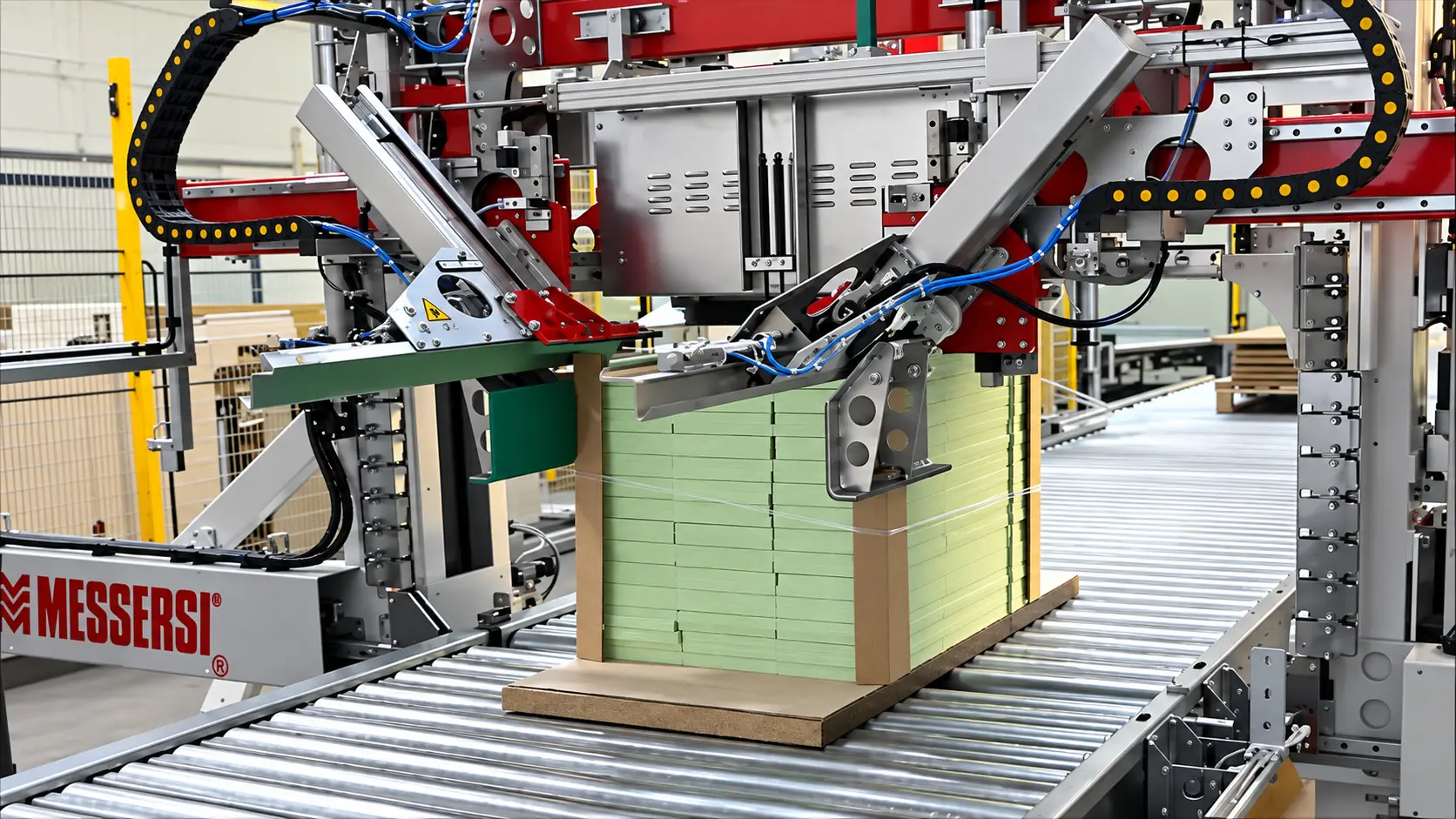
Pallet strapping limits load movement during handling, storage and transport. The correct orientation depends on the risk to be controlled: vertical strapping secures the goods to the pallet, while horizontal strapping compacts the layers around their perimeter.
There is no universal configuration. The product, pallet geometry, throughput and logistics route determine the number of straps, their position and the admissible tension. This guide focuses on the key decision: vertical or horizontal strapping machine.
What is pallet strapping?
Strapping consists of guiding one or more bands around a load, applying controlled tension and joining their ends. In an end-of-line system, the process can perform three functions:
- Secure the product to its transport base.
- Compact grouped boxes, bags, blocks, panels or containers.
- Preserve the geometry of the unit load until it reaches its destination.
Strap should not be considered in isolation. Depending on the product, it works alongside edge protectors, top pressing, anti-slip material, stretch film or a Stretch Hood. The aim is not to apply maximum force, but to create a stable load without deforming the product or damaging its edges.
Vertical strapping: securing the load to the pallet
In vertical strapping, the band passes over the top of the goods, down both sides and underneath the pallet or through its openings. This physically connects the load to its base.
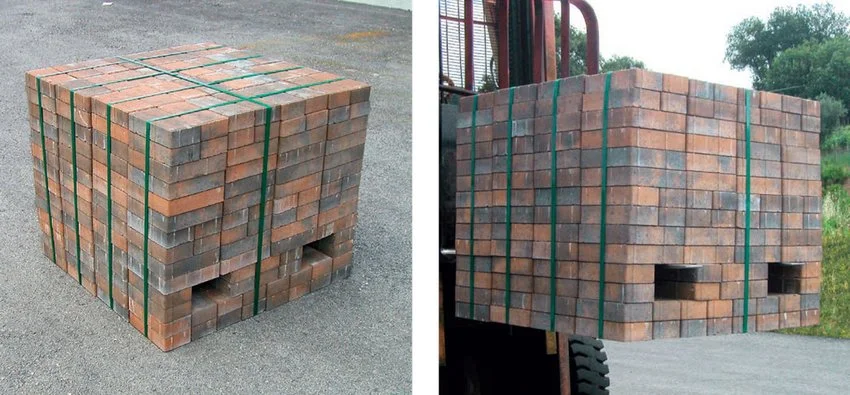
This solution should be assessed when the goods could lift, tilt or move relative to the pallet. It is commonly used for loads of boxes, bags, blocks, tiles, panels and other stacked products.
Technical points to review
- Pallet underside: blocks, deck boards and openings determine how the lance can pass.
- Vertical strength of the product: a press can settle the load before tensioning.
- Top edges: edge protectors distribute pressure and protect the packaging.
- Strapping pattern: straps should align with strong areas and avoid gaps.
See the available configurations for our automatic vertical strapping machines.
Horizontal strapping: compacting the layers
In horizontal strapping, the band surrounds all four sides of the load at one or more heights. Its purpose is not to secure the product directly to the pallet, but to contain the perimeter and prevent the layers from spreading.
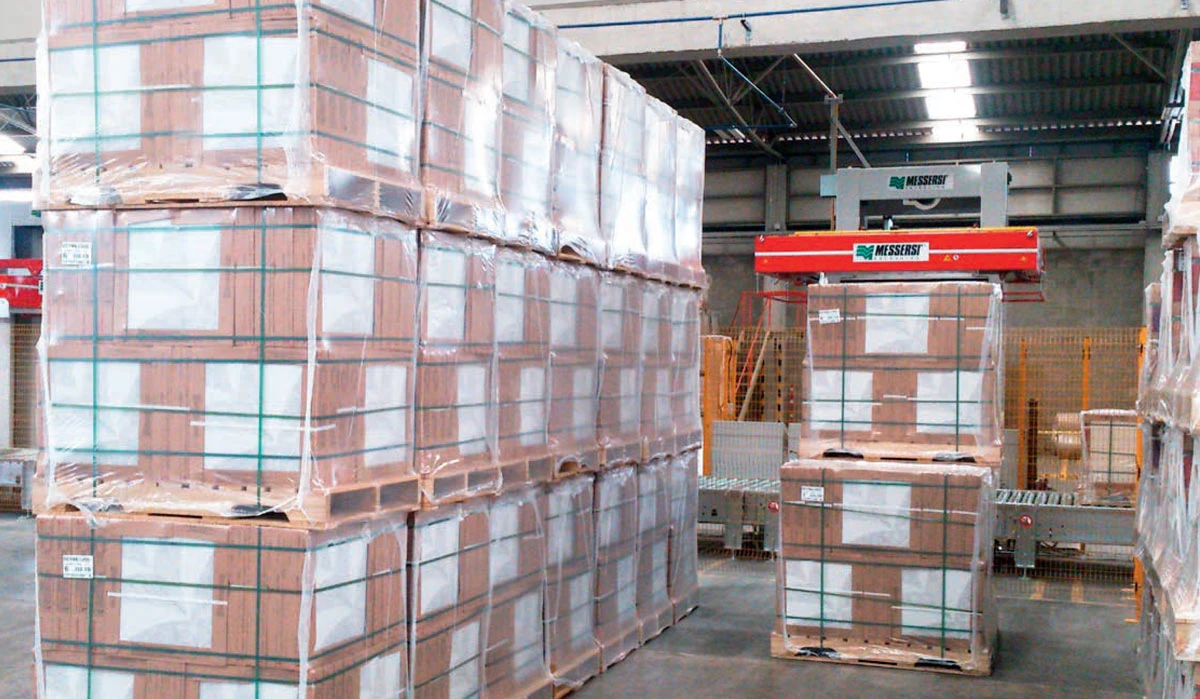
It is used for tall loads, stacks of boxes or containers, layered materials and products that tend to move sideways. The strapping machine can include centring or side compression to square the pack before each cycle.
Technical points to review
- Height of each strap: it must act where the load actually needs restraint.
- Admissible lateral pressure: excessive compression can deform boxes or containers.
- Number of straps: this depends on height, layer cohesion and transport conditions.
- Format variation: the moving arch must cover every height planned for production.
See the options for our automatic horizontal strapping machines.
Vertical vs horizontal strapping: comparison
| Criterion | Vertical strapping | Horizontal strapping |
|---|---|---|
| Main function | Secure the load to the pallet | Compact the perimeter |
| Movement controlled | Lifting or separation from the base | Sideways spreading of the layers |
| Strap path | Over the load and under the pallet | Around all four sides |
| Typical applications | Bags, boxes, blocks, panels and ceramic products | Boxes, containers, layered materials and tall loads |
| Auxiliary equipment | Under-pallet lance, press and edge protectors | Moving arch, centring unit and side compactor |
| Critical condition | Pallet underside geometry | Lateral strength of the product |
The table supports the initial decision, but it does not replace testing with the actual load. Two pallets with identical dimensions may require different solutions if product rigidity, stacking pattern or distribution route changes.
When should both systems be combined?
Vertical and horizontal strapping are not mutually exclusive technologies. A tall load made up of units with low cohesion may require:
- Horizontal strapping to compact and square the layers.
- Vertical strapping to secure the complete load to the pallet.
- Wrapping or hooding afterwards to protect the surface and contain small elements.
The sequence is defined through testing because compaction can alter the geometry and therefore the tension of straps applied earlier.
How to choose a pallet strapping machine
Before comparing machine models or nominal speeds, gather the following data:
- Minimum and maximum load dimensions.
- Weight, material and compression strength.
- Pallet type and underside design.
- Palletising pattern and weak points in the load.
- Pallets per hour and available cycle time.
- Required number, orientation and position of the straps.
- Conveyor infeed and outfeed direction.
- Need for pressing, centring or edge-protector placement.
- Storage and transport conditions.
- Space for operation, coil replacement and maintenance.
With this information, engineering can define the strap path, guiding system, automation and auxiliary equipment without oversizing the installation.
Common industrial strapping mistakes
- Choosing the machine before studying the load. Strap orientation must address the movement that needs to be controlled.
- Always using maximum tension. More force can mean more damage, not greater stability.
- Ignoring pallet geometry. In vertical strapping, a poorly designed lance path can cause jams.
- Positioning straps over weak areas. Concentrated pressure can crush boxes or mark surfaces.
- Validating only in the factory. Testing should reflect actual handling, storage and transport.
- Comparing throughput alone. Head access, coil changes and fault recovery also affect production.
Frequently asked questions about pallet strapping
Does strapping replace stretch film?
Not always. Strap applies concentrated restraint and can secure the load to the pallet; film contains and protects a larger surface. Many lines combine both systems because they perform different functions.
How many straps does a pallet need?
There is no universal number. It depends on weight, height, layer cohesion, product strength, strap material and the forces encountered along the logistics route. The final pattern must be validated with the actual load.
Which system is recommended for a tall load?
If sideways spreading is the main issue, horizontal strapping should be assessed first. If the load could separate from its base, vertical strapping should be considered. A tall load may need both systems.
Is PET or PP strap better?
It depends on the load and logistics cycle. Strength, elongation, recovery and long-term tension retention should be compared through testing.
A strapping solution is designed around the load
The choice between vertical and horizontal strapping begins by observing how the pallet fails: vertical to secure the goods to the base; horizontal to contain sideways spreading; both when the two risks coexist.
Robotec Packing designs and integrates industrial strapping solutions into complete end-of-line systems. Send us the formats, weights, throughput and photographs of the load and our team can assess the right configuration. Contact our engineering team.